
Fifteen years ago I started my own home care agency in Canada with no roadmap. I was working in a hospital, I knew I could do more, and I had no idea where to begin. I wasted a lot of time and money doing the wrong things first. This guide is everything I wish someone had told me, step by step.
Is home care a good business to start?
Canada's population is aging, and most older adults want to stay in their own homes for as long as they can. That creates steady demand for reliable, caring help at home in almost every community. It's also a business you can start from a home office, grow one client at a time, and build without paying franchise fees.
It's not easy money, though. You're responsible for vulnerable people, and your reputation is built one client at a time. If you care about doing it right, it's one of the most rewarding businesses there is.
Step 1: Decide what kind of care you'll provide
There are two broad types of home care business:
- Non-medical home care (often called home support or personal care): personal care like bathing and dressing, companionship, meal preparation, light housekeeping, medication reminders, and help getting to appointments. Clients or their families usually pay privately. This is where most new agencies start.
- Home health care: nursing services like wound care, medication administration, foot care or palliative care. These must be provided by regulated nurses, and cost more to deliver.
You don't need to be a nurse to own a home care business. Many successful owners come from business, caregiving or other backgrounds. If you offer nursing services, you'll hire regulated nurses (RNs, RPNs or LPNs) to provide them.
Before you decide, research the agencies already operating in your area. What do they offer? What do they do well, and what do families complain about? Don't be discouraged by competition: if other agencies are busy, that's proof there's demand.
Step 2: Choose your business structure and register
Most owners choose between a sole proprietorship (simple and inexpensive, but you and the business are legally the same) and a corporation (a separate legal entity, which can protect your personal assets). Talk to an accountant about which is right for you.
Registration is quick and inexpensive. For example, registering a business name in Ontario costs $60 online, and incorporating costs $300 provincially or $200 federally. You'll also need a CRA business number and payroll account before you hire.
Do you need a licence? In most provinces, there's no specific licence to run a private, non-medical home care business beyond your business registration and local permits. There are exceptions. For example, in Ontario a business that places workers with clients who direct their work may need a Temporary Help Agency licence. Rules change, so always check with your province and municipality. BizPaL is a good place to search for permits.
Step 3: Write a business plan
A business plan forces you to answer the hard questions before you spend money, and banks will want to see one if you apply for financing. Include:
- Your target clients (for example, seniors living at home, adults with disabilities)
- The services you'll offer and the area you'll cover
- Your rates and business model (hourly billing, minimum visit lengths, packages)
- Your start-up costs and how you'll cover your first few months of payroll
- Your marketing plan and a list of local referral sources
- Your hiring plan, including caregiver training
Not sure where to start? The free Business Plan Worksheet walks you through it.
Step 4: Price yourself to pay yourself
Most new owners price too low. They feel they can't justify higher rates when they're just starting out, and end up with a business that pays everyone except themselves.
Your rate has to cover the caregiver's wage, mandatory employer costs like CPP, EI, vacation pay and workers' compensation (usually 13–15% on top of wages), your overhead, and a profit margin. A simple rule: the caregiver's wage should never be more than 60% of your bill rate. If you plan to deliver excellent service, don't apologize for charging rates that reflect it. (More on this in How to price home care services in Canada.)
Step 5: Pick a name and build a simple brand
Your business name is something you'll say hundreds of times, so make it easy to pronounce and spell. Get feedback from at least five people before you commit. (Imagine falling in love with the name "1 Star Home Care", until a friend points out that one star is the worst review you can get.)
When I started, I spent far too much on a complicated custom website. If I did it again, I'd use a simple website builder and create a clean four- or five-page site: what you do, where you do it, who you are (with a real photo), and how to reach you. Put your phone number at the top of every page.
Step 6: Set up your policies and forms before you get busy
At the beginning, the phone doesn't ring much, and you'll have something very precious: free time. Use it. Once clients start coming, you'll be running between interviews, client visits and the bank, and there will be no time to write policies.
Before your first client, have these ready:
- Client intake forms, service agreements and care plans
- An employee handbook: vacation, sick calls, uniforms, payroll and conduct
- Policies and procedures for safe care, incident reporting, privacy and infection control
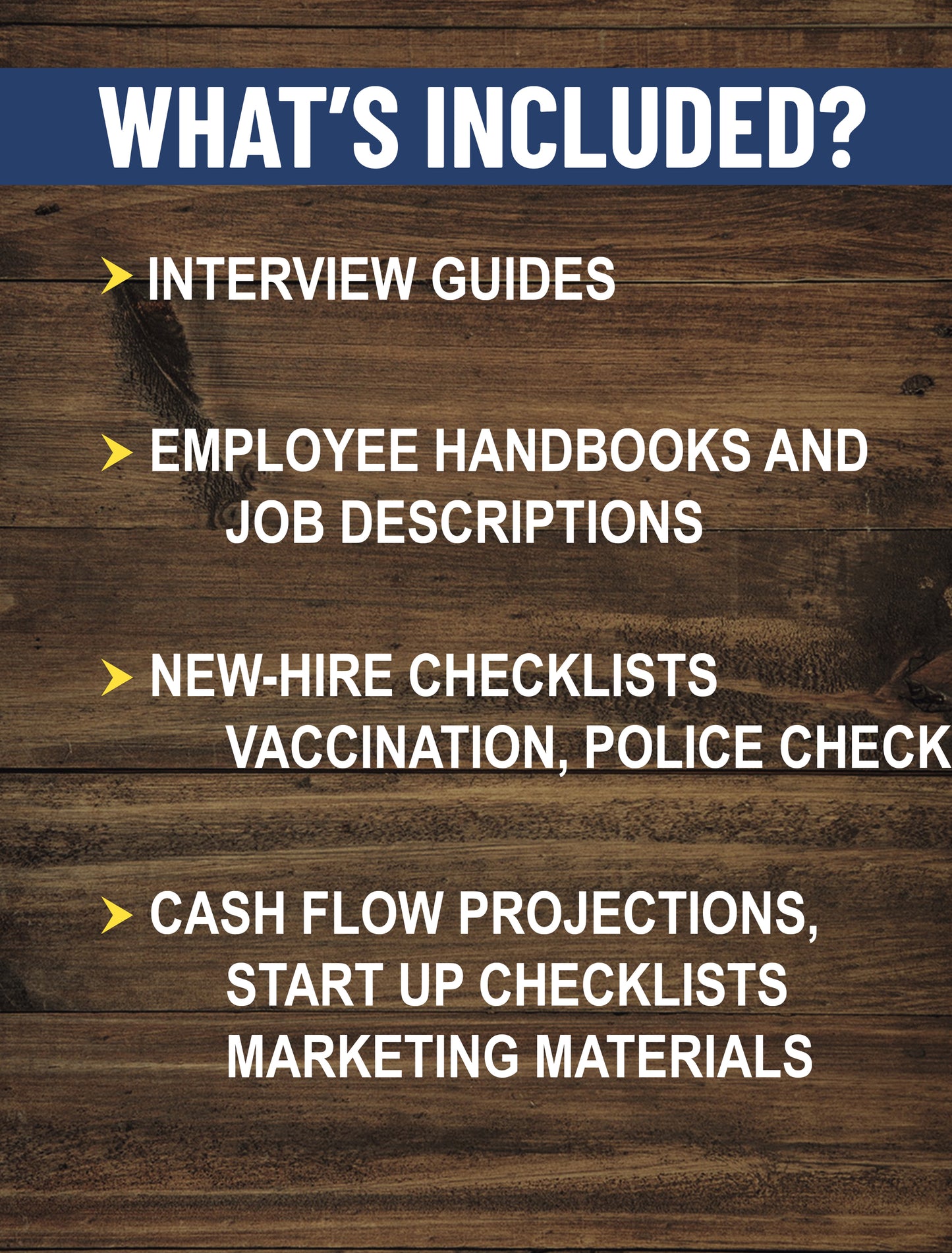
- Hiring documents: job descriptions, interview guides and reference checks
Writing all of this from scratch took me a very long time. The Complete Start-Up Kit gives you 100+ editable forms, contracts and guides so you don't have to.
Step 7: Get insured
You'll need general liability insurance, plus any other coverage your broker recommends for the services you offer. In my experience, most small agencies pay between $1,500 and $4,500 a year. Read Canadian home care business insurance: what do you need? for the details.
Step 8: Find clients and hire caregivers at the same time
New owners always ask me which comes first. When I started, I hired first: five wonderful caregivers, all eager to start. It took me eight weeks to land my first client, and by then every one of them had taken other jobs.
The answer is to do both at once. Market for clients, and when you get one, hire for that client's schedule right away. You can tell applicants exactly which days and hours you need, which makes for a much better match. (More on this in What comes first, clients or caregivers?)
And if you can't find someone in time? You cover the shift yourself. I've worked my share of night shifts.
Step 9: Deliver what you promise
This is the part most people skip, and it's the real secret. Follow up after every first visit. Fix problems fast. Keep families informed. Happy clients tell their friends, their doctors and their neighbours, and that word of mouth will grow your business more than any ad.
Starting in the U.S.?
The steps are similar, but many states require a home care licence, and Medicare or Medicaid certification is only needed if you plan to bill those programs. Check your state's requirements first.
Ready to start?
- Just exploring? Grab the free Business Plan Worksheet, or take the Introduction Course ($19.99).
- Ready to build it yourself? The Complete Start-Up Kit ($199) has the forms, policies and planning tools you need.
- Want it built for you? The Premium Start-Up Package includes your business plan, custom policy manual, branded forms and website.
- Want to talk it through? Book a 1-hour consultation with me.
You've got this.
– Alyssa
This article is general information, not legal, tax or accounting advice. Requirements vary by province and change over time.
About the Author